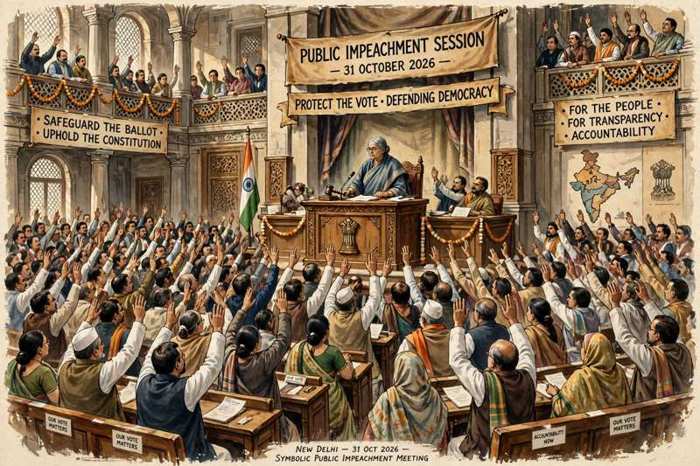
This is my analysed summary of the events of 31 October and 1 November 2026: what happened, what procedure was chosen, whether it was legal, and what it means socially. The charges against the Chief Election Commissioner are opposition allegations, not proven findings, and the Election Commission's position on SIR is noted below.
On 31 October 2026, the INDIA bloc held a symbolic “public impeachment” of Chief Election Commissioner Gyanesh Kumar at Congress president Mallikarjun Kharge's residence, 10 Rajaji Marg, New Delhi. Former Lok Sabha Speaker Meira Kumar presided. On 1 November 2026, the INDIA bloc marched to Ramlila Maidan for a rally demanding the CEC's removal, while the BJP held a counter-march in West Delhi, led by Union Minister Hardeep Singh Puri and others, focusing on the timing of the rally on the anniversary of the 1984 anti-Sikh violence and on disruption to pre-Diwali trade.
That vote was a public, political act. It was not a parliamentary vote, and it carries no legal force.
Removal: Under Article 324(5), the CEC can be removed only in the same manner and on the same grounds as a Supreme Court judge — “proved misbehaviour or incapacity.” That requires a motion signed by at least 100 Lok Sabha or 50 Rajya Sabha members, admission by the presiding officer, an inquiry, and passage in each House by a majority of total membership plus two-thirds of members present and voting. Only then can the President order removal. No CEC has ever been removed.
The prior formal route: Opposition MPs submitted removal motions in March 2026, signed by 130 Lok Sabha and 63 Rajya Sabha MPs, and they were rejected in April by the Speaker and Chairman, who said the notices lacked sufficient credible material to establish a prima facie case. That rejection does not bar a fresh, better-evidenced motion, nor does it bar public protest.
Speech and assembly: A peaceful political meeting, a resolution, and criticism of a public official are protected by freedom of speech (Article 19(1)(a)) and freedom to assemble peaceably without arms (Article 19(1)(b)). Those rights are not absolute: speech can be reasonably restricted for public order, defamation and incitement, among other grounds in Article 19(2). Using parliamentary language does not create parliamentary privilege, because privilege attaches to proceedings in Parliament, not to a mock session. Specific factual allegations against a named official, if false and made to harm reputation, could in principle raise defamation issues; opinion, fair comment on a matter of public interest, and a demand for inquiry stand on stronger ground.
What would change the legal position: a new parliamentary motion, admitted, with an inquiry finding proved misbehaviour or incapacity, followed by the special majorities above; or a court finding on how SIR is carried out. The Supreme Court already upheld the ECI's power to conduct SIR in May 2026, while disputes over documents, Form 6 and deletions are still being argued. The Election Commission maintains SIR is intended to remove deceased, duplicate and shifted voters, and to give eligible voters a way to seek inclusion.
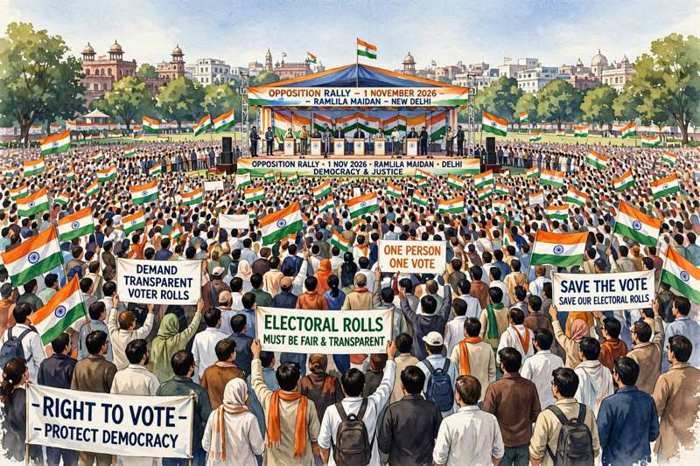
For supporters, the meeting did three social jobs: witness — a chair, charges and a vote in public turn a complaint into something people saw; voice — voters who say their names were deleted get a platform, not just a statistic; mobilisation — it set up the 1 November rally, converting a meeting into a movement's next step.
For critics, it raised three risks: blurring form and substance — calling a political meeting an “impeachment” can mislead people into thinking a constitutional act happened; personalising an institutional dispute — focusing on one CEC rather than on SIR rules and remedies can make compromise harder; polarisation — one public act invites an opposite public act, and the argument shifts from voter rolls to history, timing and disruption.
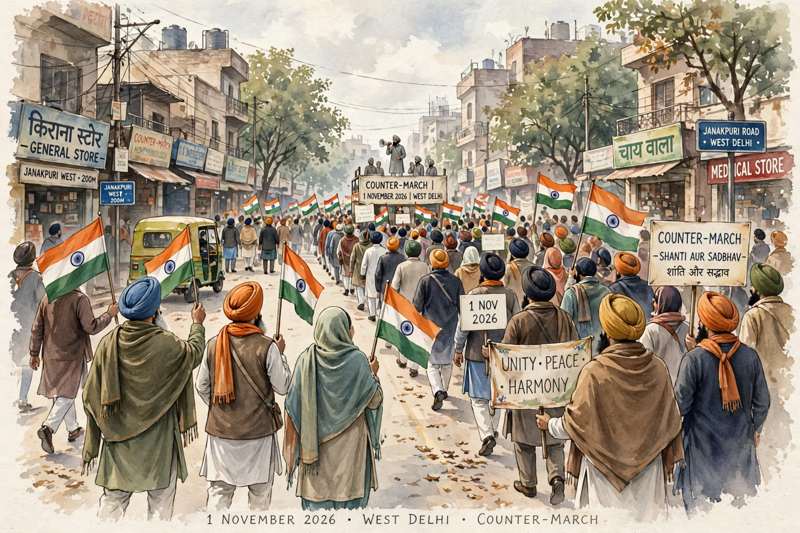
The deeper tension: democracies need independence of the referee — hence the very high bar for removing a CEC — and accountability of the referee — hence the right to criticise, protest and demand inquiry. A symbolic impeachment sits on that fault line. It is lawful protest, but it is not accountability in the legal sense. Its social power depends on whether the public reads it as “we are demanding the real process” or as “we have already decided the verdict.” If it leads to a new, evidence-based parliamentary motion or a court-tested remedy for wrongly deleted voters, its effect is constructive. If it only hardens two camps, trust in the electoral system can fall even if no law was broken by holding the meeting.
Legally: a lawful political meeting and resolution, with no power to remove the CEC, no parliamentary privilege, and defamation as the only realistic legal exposure for specific false factual claims. Socially: powerful as witness and mobilisation, risky as a substitute for the formal process — it can either pressure that process into action, or replace it in the public mind with a verdict that was never legally reached.
Verification note: these are AI illustrations, not photographs of the 2026 events. The dates, places, leaders' roles and sequence are checked against reporting above; the scenes, halls and street signs are illustrative, and the people are generic figures.