I have been thinking about why that working meeting on 31 October stayed with me — the chair, the motion, the resolution, done in public. And then I remembered: India has done this before, and once, it changed everything.
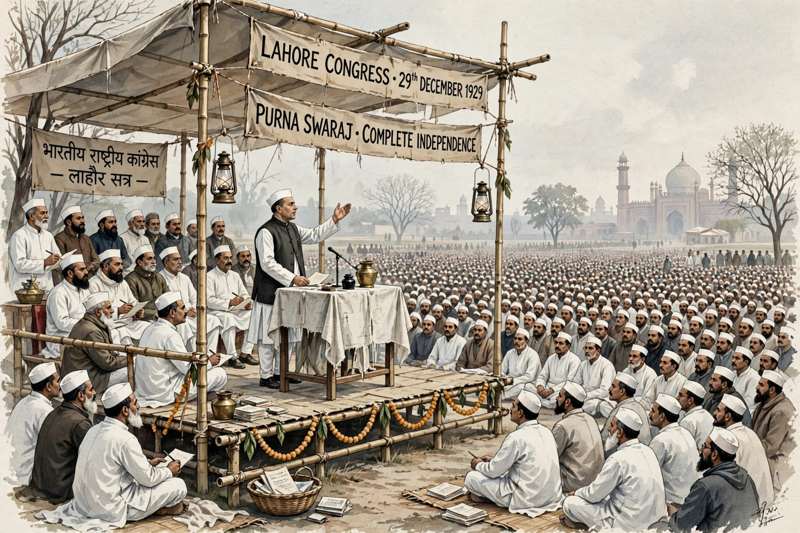
In December 1929, the Indian National Congress met in Lahore, with Jawaharlal Nehru presiding. Until then, the demand had often been framed as dominion status — self-rule inside the British system. At Lahore, that changed.
The Congress passed the Purna Swaraj resolution: complete independence as the goal, not a favour to be granted, not a half-step to be negotiated down.
That was not just a change of words. It was a change of form, done in public:
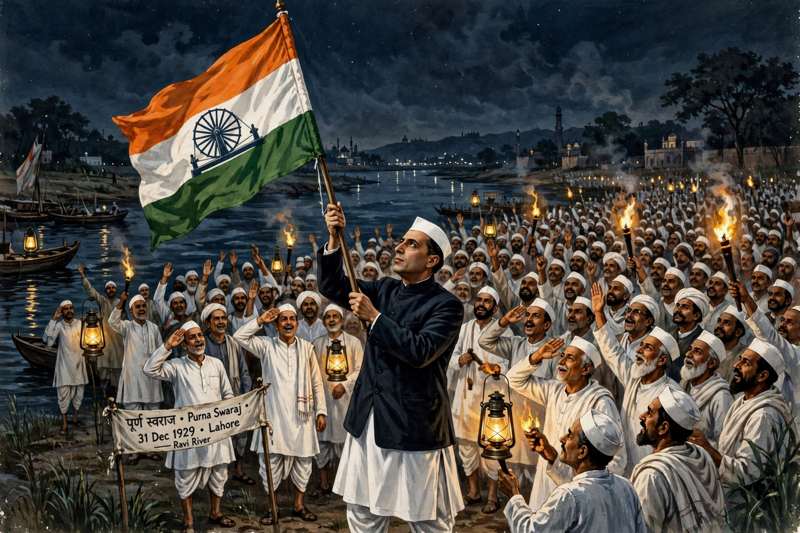
That pledge is why Lahore led to freedom. A resolution in a hall can be filed away. A pledge taken in public, village by village and town by town, cannot be unseen. It gave the movement a new, clear goal, and it authorised the next step: civil disobedience, which Gandhi would lead into the Salt March in 1930.
That is the parallel I see with a new India building today.
A beginning does not start with a slogan. It starts when a form is used in public — a chair, a motion, a resolution — and people witness it together. In 1929, that form turned a demand into a pledge. In 1930, that pledge turned into action.
And the warning in it is the same as the one I wrote before: it is not too soon to recall. In 1929, India recalled that freedom was not something to be given, but something to be claimed. Today, the recall is the same in a different form: that a vote is a right belonging to the voter, and power in a democracy is borrowed, not owned.
Lahore was not the end of the struggle. It was the moment the struggle stopped asking for less, and started saying, in public, what it actually wanted.
1. The session — a chair, and a change of goal. The story behind the first picture is not the crowd, it is the decision in the chair. For years the argument had been about how much self-rule Britain would allow. At Lahore, under Nehru, Congress said the goal itself had changed: not dominion status, but complete independence. The people in white khadi are not decoration — khadi was the uniform of that decision, homespun cloth instead of British mill cloth, a visible refusal to depend on the system being challenged.
2. The river at midnight — why a flag, not just a resolution. A resolution can be passed and forgotten. A flag hoisted at midnight, on a riverbank, in front of a crowd shouting “Inquilab Zindabad,” cannot be filed away. The story behind the second picture is that form: the Tricolour with the charkha, the spinning wheel for self-reliance, raised at the turn of the year, so that the new year began with a new, public goal.
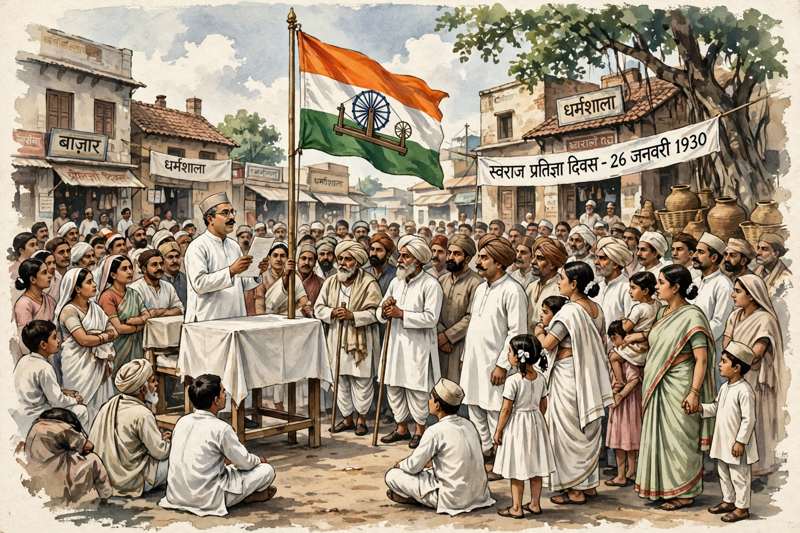
3. The pledge in the town square — how a beginning spreads. The third picture is not Lahore at all. It is what Lahore asked for next: on 26 January 1930, in villages and towns across India, people gathered, hoisted the flag, and took a pledge in their own languages. That is how a meeting in one city became a movement — not because everyone was in the hall, but because everyone could repeat the same public act where they lived. The reader in the picture is deliberately a local reader, not Nehru, because the pledge belonged to the town, not just to the president.
Verification note: these are AI illustrations, not 1929 photographs. The people are generic likenesses, not verified portraits, and the Lahore skyline in the first picture is illustrative. The dates, the flag design with the charkha, the khadi dress, and the sequence — session, midnight hoisting, 26 January pledge — are checked against the history above.
To be continued — next: what the 26 January pledge actually asked people to do, and what a public pledge asks of us now.